
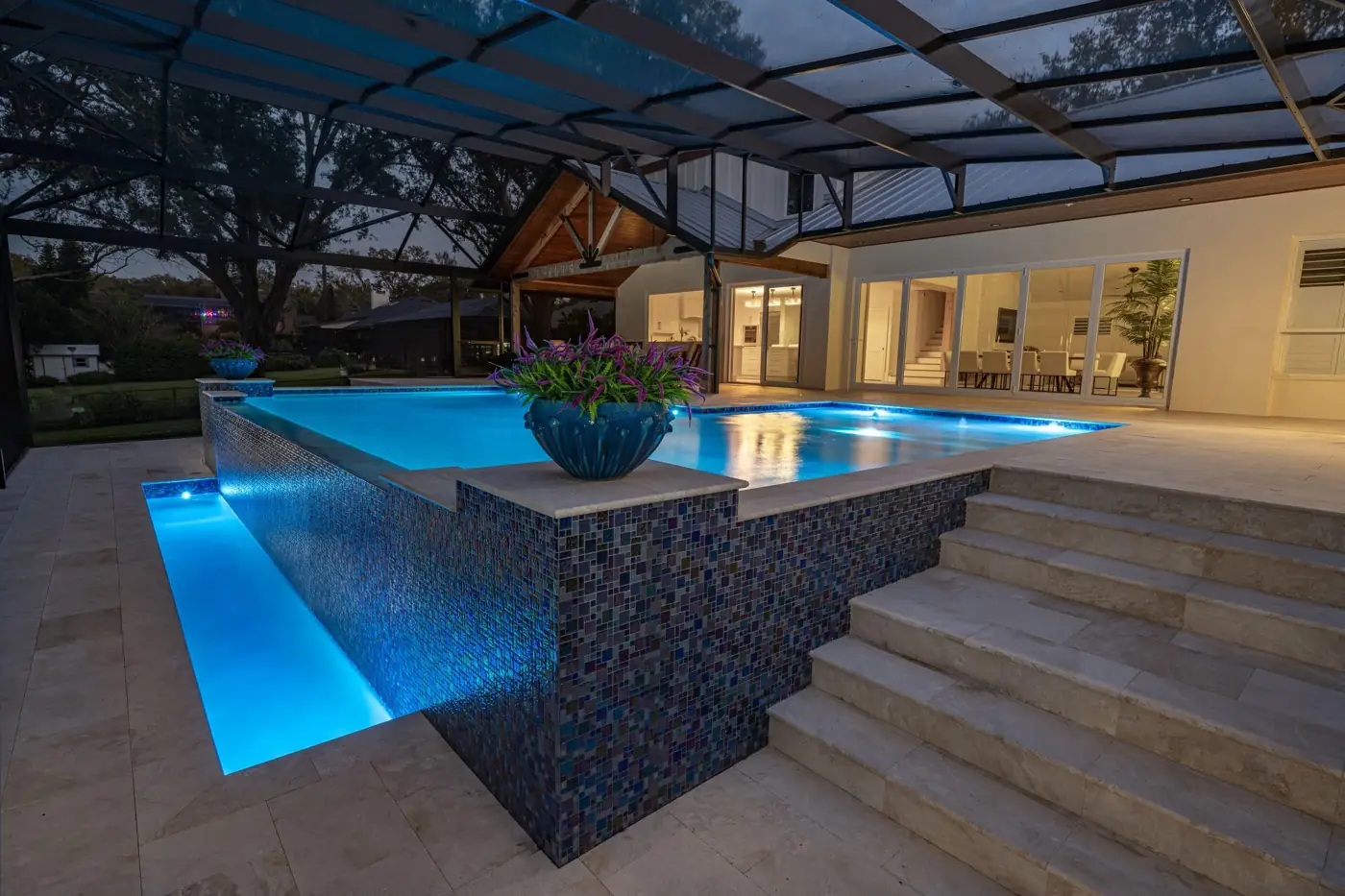
On the beach: the state's coastal permit
On Anastasia Island, Vilano Beach, Crescent Beach and the Flagler County oceanfront, a pool seaward of the Coastal Construction Control Line needs a Florida Department of Environmental Protection permit as well as the city or county permit. The state's general permit for a pool at a single-family home sets these limits:
| Rule | What it means for your pool |
|---|---|
| Stay behind the 30-year erosion projection | The state's forecast of where the shoreline will be limits how close to the dune you can build |
| Pool floor within 2 feet of today's grade, or the whole pool above it | Expect walls that rise above the yard, which is why so many beach pools sit up high |
| Dug sand never leaves the lot | It is spread on the ocean side of the line, so the deck and planting are designed around it |
| No more than 700 cubic yards of fill, sloped rather than walled | Raised decks finish in planted banks instead of retaining walls |
| A two-year permit that cannot be extended | We line up the build before the permit is issued so the clock does not run out |
These are the general permit's terms for a single-family pool. If a lot cannot meet them, the project goes through a slower individual permit, and we tell you that at the Site Assessment.
The sequence
Survey and soils
A current signed and sealed survey showing the control line, and a geotechnical report that decides whether the shell needs pilings. Both start the week you sign.
Design locked
Every structural choice is made before submission, because a change afterward restarts the review.
State and local review
The state reviews in rounds, and each response restarts its clock. Plan for months. On our 2026 Ponce Inlet oceanfront project it took about eleven months from contract to state permit.
Pre-construction meeting
The contractor, the owner or their representative and the state field inspector meet on site before anyone digs.
Lighting for nesting season
St. Johns County's land development code regulates new and existing beachfront lighting to protect sea turtles, and the nesting season runs May 1 to October 31. We set pool lights so they aim back toward the house, specify low, shielded and amber-capable fixtures, and program the automation for the season.
In the old city: historic review
The City of St. Augustine's Planning and Building Department at 75 King Street issues pool permits inside city limits. In the city's historic preservation zoning districts, alterations to buildings and sites require approval from the Historic Architectural Review Board, which meets on the third Thursday of each month. Some decisions are made by preservation staff, and those can be appealed to the board within 30 days.
- Check early. We ask preservation staff which review applies before the design is final, not after.
- Design for the place. Courtyard pools, plunge pools and spas that suit the architecture, with materials and lighting that respect the street.
- Plan the calendar. A monthly board means the meeting date belongs in the schedule from the start.
- Plan the access. Narrow streets and tight lots decide what equipment can reach the yard.
Our guide to building a pool in a St. Augustine historic district goes further.
On the river and the marsh
Lots on the Matanzas River, the Intracoastal and the marshes usually skip the state coastal permit but bring seawalls, flood zones, soft soil and setbacks from the water. We read the survey for all of them before we draw, so the pool is designed where it can actually be permitted.