
A pool behind a historic St. Augustine home is very possible. It just goes through a step most Florida pools never see: historic review. Plan for it from the start and it shapes a better design. Discover it late and it costs you a month or more.
Who reviews what
Inside city limits, the City of St. Augustine's Planning and Building Department, at 75 King Street, issues building permits. In the city's historic preservation zoning districts, HP-1 through HP-5, alterations to buildings and sites require approval from the Historic Architectural Review Board. Preservation staff handle some decisions at an administrative level, and those can be appealed to the board within 30 days.
The city also applies preservation standards to designated historic buildings, including contributing buildings in National Register districts. The city lists those districts as the St. Augustine National Register Historic District, Model Land Company, Lincolnville, Abbott Tract, North City, Nelmar Terrace and Fullerwood Park.
Which review applies to a specific property is the city's call, not ours. Our job is to ask preservation staff early, with a clear site plan, and build the answer into the schedule.
How to plan the schedule
Confirm the district and the path
Before design is final, we check your property's zoning and whether the work goes to staff or to the board.
Design for the review
Materials, the pool's visibility from the street, fencing and lighting are drawn with the guidelines in mind, so the application tells a simple story.
Submit with the board calendar in view
The board meets on the third Thursday of each month. Missing a deadline can mean waiting for the next meeting, so we work back from the date.
Building permit and construction
With approval in hand, the pool goes through the normal permit and our standard 16 to 28 week design-to-swim process.
Designs that suit historic homes
- Courtyard pools. A simple rectangle with a clean coping line sits well beside coquina walls and old masonry.
- Plunge pools and spas. On the smallest lots, a deep plunge pool with jets gives you most of the use in a fraction of the space.
- Quiet water features. A wall spout or a sheer descent adds sound that covers street noise without competing with the house.
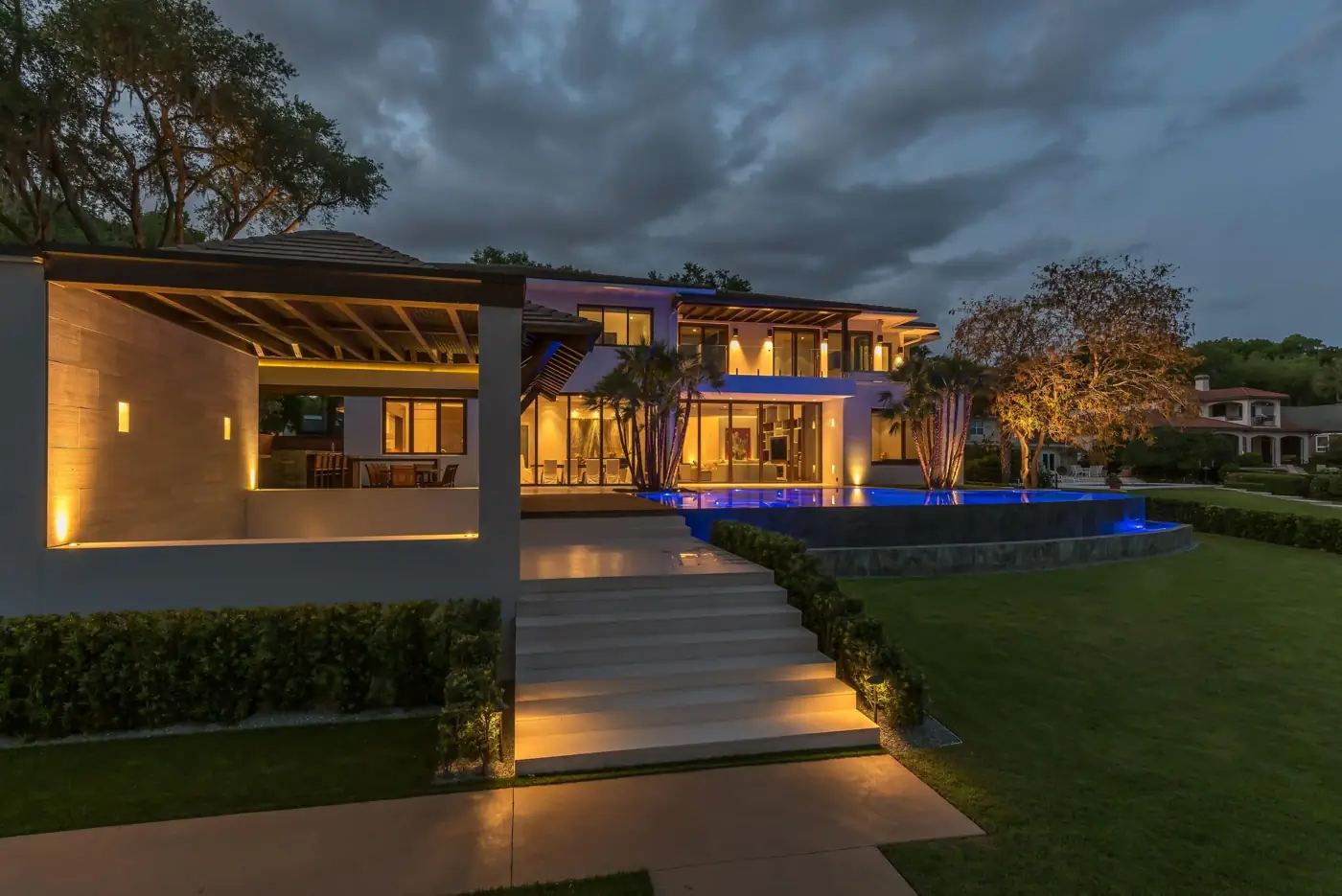
- Low, warm lighting. Lighting that grazes walls and plants instead of floodlighting the yard suits the setting and the neighbors.
- Planned access. Narrow streets and tight side yards decide what equipment can reach the yard, so access is part of the Site Assessment.
What it costs
Historic review mostly adds time, not cost. Courtyard and plunge pools often fall in our Foundation ($120,000 to $175,000) or Signature ($175,000 to $325,000) tiers depending on finishes and features. Tight access adds $3,000 to $8,000 when smaller equipment is needed.
Before you call
- Your survey.
- Whether your home is a designated landmark or contributing building, if you know.
- Photos of the yard and the view from the street.